Quick Answer / Expert Verdict: Yes. A roof ballast solar mounting system replaces bolts and anchors with engineered weight, keeping the roof membrane completely untouched and original warranties intact. Commercial installers report 30–40% reductions in installation time because there are no drilling, sealing, or flashing steps required, making it the ideal non-penetrating flat roof solar mount solution.
For commercial and industrial buildings with flat roofs, the appeal of solar is obvious: vast, unshaded surface area and a direct path to cutting operating costs. Yet the mounting decision often stalls on a single concern—protecting the roof membrane. Every penetration introduces a potential leak point, and with roofing warranties on the line, facility managers are rightly cautious. That tension between going solar and preserving the roof is exactly where ballasted mounting earns its place.
How Ballasted Racking Works: Protection Meets Speed
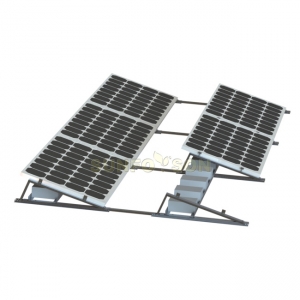
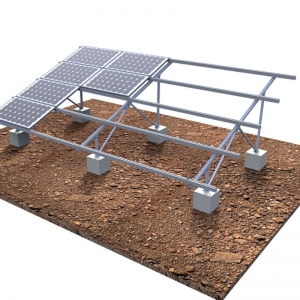
A roof ballast solar mounting system replaces bolts and anchors with engineered weight. Concrete blocks or pavers hold the array in place, and the racking is connected into a rigid, interconnected raft so the system resists wind uplift as a single unit rather than a collection of individual panels.
For a flat roof solar mount, this changes the economics of a project in ways that go beyond waterproofing. Commercial installers report 30–40% reductions in installation time compared with penetrating systems, because there is no sealing, flashing, or waterproofing step to sequence into the schedule. The roof membrane remains untouched, the original warranty stays intact, and the array can be expanded module by module as energy needs grow.
The Engineering Behind Wind Uplift and Ballast Load
The engineering behind a reliable ballast system is less visible but equally important. Wind uplift—not panel weight—drives the design. Ballast loads typically fall in the 15–25 kg/m² range depending on the wind zone, with perimeter and corner zones requiring additional weight where uplift forces concentrate.
Tilt angle also matters: a 10° array often needs 30–40% less ballast than a 15° layout while giving up only a few percentage points of annual yield. This is why a generic catalogue bracket rarely fits a real project. A solar roof mounting system specified for one building’s wind speed and roof structure may be under- or over-engineered for the next.
Sunforson’s Tailored Flat Roof Ballast Solutions
That gap between a catalogue product and a site-specific solution is where Sunforson’s flat roof ballast brackets are built to perform. The foldable triangular structure collapses for shipping, cutting freight volume and logistics cost before the system even reaches the roof.
Pre-assembled components and a modular layout mean crews spend less time on tools and more time securing panels, and the same platform scales from a single array to a multi-megawatt rooftop without redesign. More importantly, Sunforson’s engineering team does not hand over a fixed bill of materials. Ballast size and weight are customized against each project’s roof load capacity, local wind speed, and applicable design codes, so the final system is both structurally sound and code-compliant rather than conservatively oversized.
For EPCs and developers who need a mounting partner that reads site conditions before quoting a bracket, Sunforson delivers product discipline and engineering responsiveness.
Welcome to contact us: info@sunforson.com.