Quick Answer / Expert Engineering Verdict: Installing a solar array on undulating, hilly, or steeply sloped terrain requires specialized racking geometries that can absorb topographical variances. EPCs must abandon rigid, fixed-frame brackets in favor of highly adjustable mounting structures featuring articulating joints, slotted connection nodes, and telescoping legs. For slopes exceeding 15 degrees, ground screw foundations are vastly superior to ramming piles due to their pinpoint rotary insertion. By utilizing a "stepped" or "terrain-following" array design, developers can maximize MW capacity on marginal lands without exorbitant earth-moving costs.
In the early days of the solar boom, developers had the luxury of deploying utility-scale projects on perfectly flat, barren deserts or expansive agricultural plains. Today, as premium flat land becomes scarce and prohibitively expensive, Engineering, Procurement, and Construction (EPC) companies are increasingly forced to develop on "marginal lands"—abandoned mining sites, rolling hills, and steep mountain valleys.
Developing on a slope introduces severe mechanical and logistical challenges. Standard racking systems are designed for flat ground; if you force them onto a hillside, the internal steel components will suffer from severe sheer stress, panel alignment will be impossible, and the aesthetic of the array will be chaotic. More importantly, attempting to flatten a massive hillside with bulldozers (civil earthworks) will destroy your project's ROI before a single panel is wired.
As a global expert in topographical PV engineering, Xiamen Sunforson Power Co., Ltd designs structural brackets explicitly engineered to "swallow" ground variances. In this deep-dive technical guide, we explain the mechanics of slope tolerance, East-West versus North-South adjustments, and how to conquer uneven terrain seamlessly.
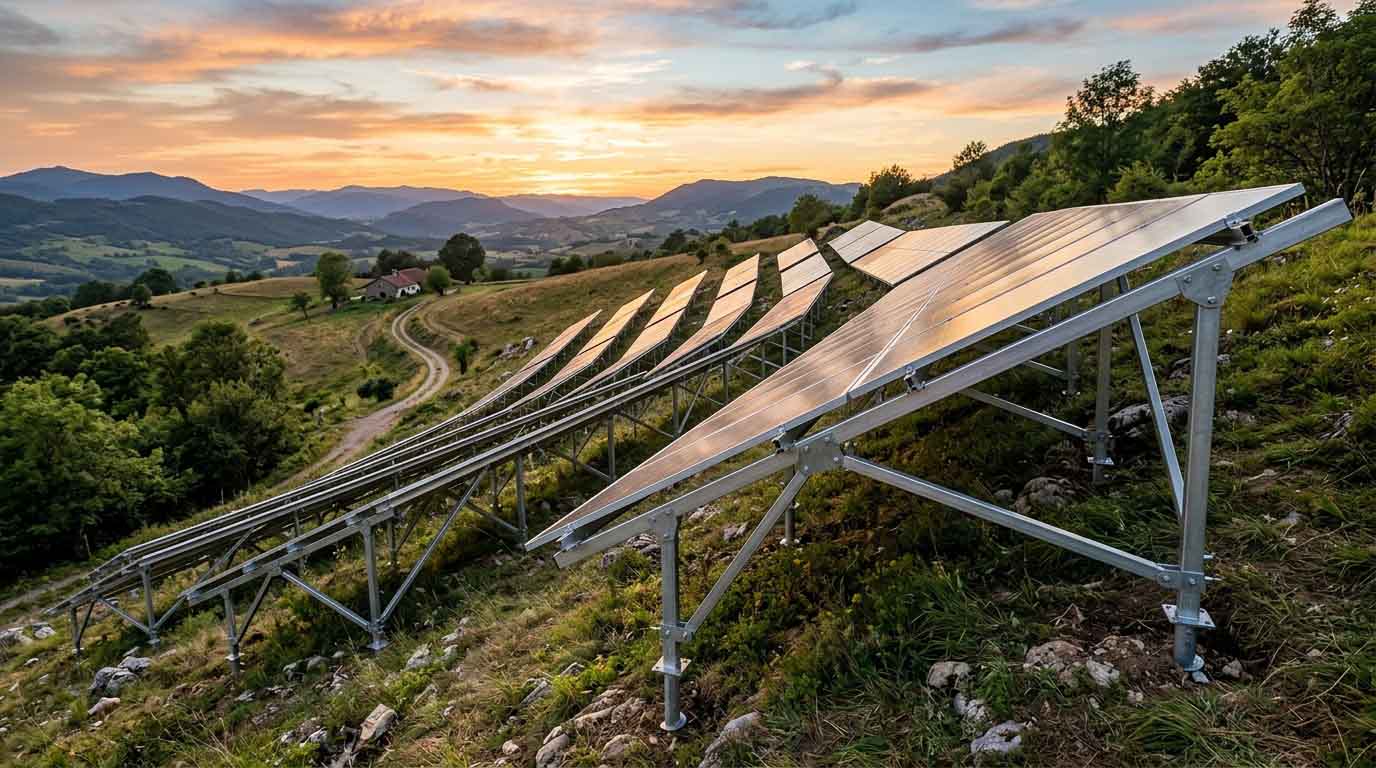
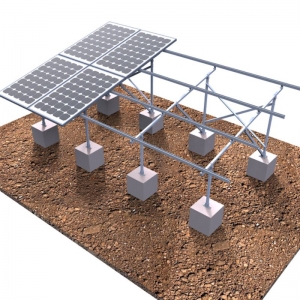
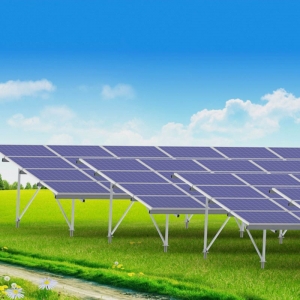
Figure 1: SunRack adjustable ground mounting system seamlessly following the natural contour of a hillside
1. Terrain-Following vs. Stepped Array Layouts
When an EPC encounters a sloped site, the engineering team must choose between two primary structural layout strategies to manage the topography:
- Terrain-Following (Parallel) Layout: In this configuration, the solar array is kept perfectly parallel to the ground beneath it. If the hill slopes at 10 degrees facing south, the entire structural table is tilted at 10 degrees. This is highly cost-effective and aesthetically pleasing, but it requires highly flexible adjustable utility-scale solar ground mounting structures capable of absorbing micro-variations (bumps and dips) along the rail line without twisting the solar modules.
- The Stepped (Terraced) Layout: When facing an East-West slope (where the hill slopes sideways across the array), you cannot simply tilt the panels sideways, as this disrupts the rain-shedding and self-cleaning properties of the glass. Instead, the racking must be "stepped" like a staircase. Each individual table remains perfectly level horizontally, but the next table is installed slightly higher or lower than the previous one on the hill.
2. The Engineering Mechanics of "Slope Tolerance"
How does a rigid metal structure adapt to unpredictable earth? The secret lies in the connection nodes—the brackets that connect the vertical ground piles to the horizontal support beams.
In a low-quality racking system, these holes are perfectly round and pre-drilled. If the ground pile is driven into a rock and sits 5 centimeters too high, the horizontal beam will not align, forcing installers to manually cut or weld the steel on-site.
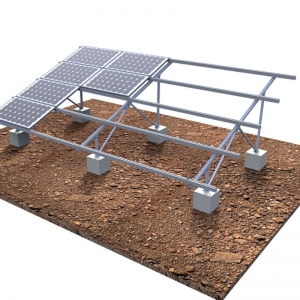
Sunforson’s engineering team solves this through Macroscopic Adjustability. We utilize elongated U-shaped slots, articulating swivel joints, and telescoping clamp heads. This gives the field installation crew massive leeway:
- Vertical Tolerance (Up/Down): Up to ±150mm of vertical play. If a pile hits bedrock early, the connector can slide lower down the post.
- East/West Tolerance (Left/Right): Up to ±50mm of lateral play to compensate for surveyor errors or pile-driver drift.
- Angular Tolerance (Pitch): Articulating purlin connectors that can hinge up to 20 degrees, allowing a straight rail to transition smoothly over a rolling hill crest.
3. Foundation Selection: Ground Screws Dominate the Hillside
While C-channel ramming piles are the fastest foundation on flat, cohesive clay, they are often a nightmare on steep slopes. Heavy hydraulic pile-driving machines have a high center of gravity; operating them on a 20-degree incline poses a severe rollover risk for the crew. Furthermore, hillsides are frequently plagued by shallow bedrock and hidden boulders.
For uneven terrain, Galvanized Ground Screws (Helical Piles) are the ultimate engineering choice. Because they are rotated into the earth (often via smaller, track-mounted excavators or even handheld pneumatic drivers), they can navigate around subsurface rocks. More importantly, ground screws offer pinpoint height control. The installer can simply rotate the screw one more revolution into the earth to achieve the exact millimeter of height required, creating a perfectly level base across highly irregular ground.
4. Translating Slope Tolerance to Commercial Applications
The engineering logic of slope adaptability is not limited to remote mountain solar farms. It is heavily utilized in commercial and industrial (C&I) applications.
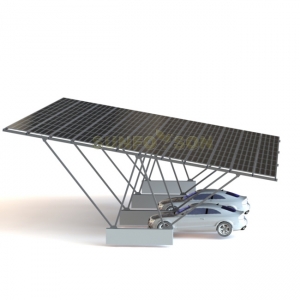
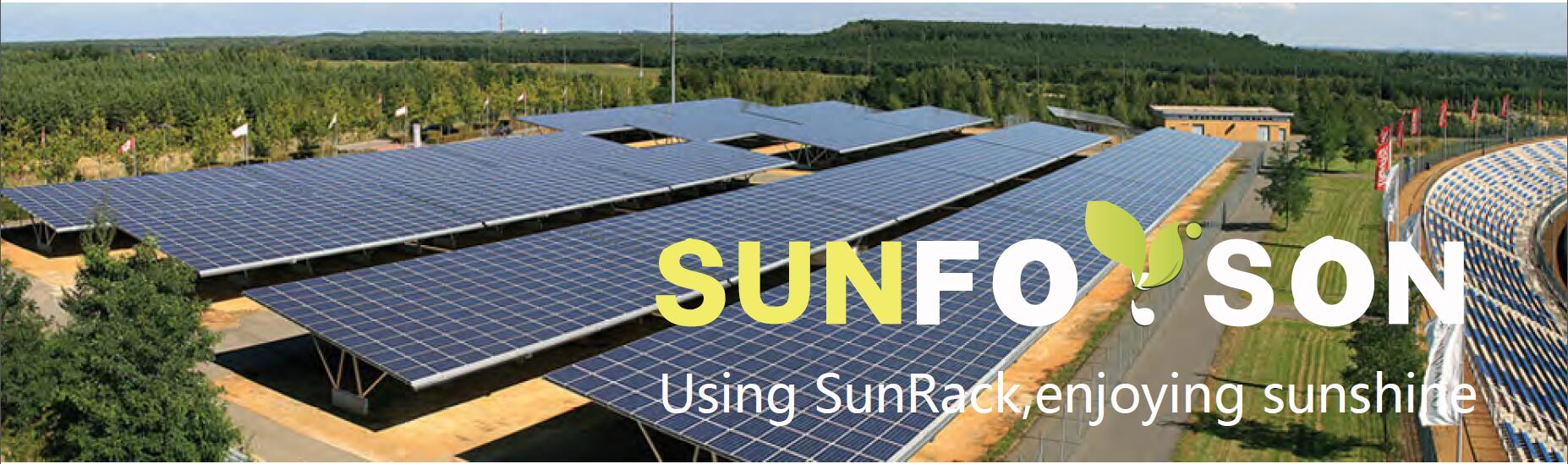
Consider a commercial parking lot. To ensure proper rainwater drainage, civil engineers always design parking lots with a 2% to 5% slope. If you install a massive commercial V-shaped solar carport canopy without accounting for this grade, the structural columns will not align with the overhead W-rails. Sunforson engineers customized carport base plates with adjustable threading to perfectly level the massive steel canopy regardless of the asphalt's drainage slope.
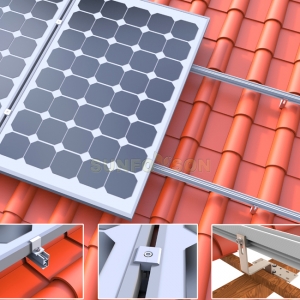
Similarly, agricultural buildings often feature complex, multi-angled roofs. Using a specialized pitched metal roof PV racking bracket with an adjustable L-foot allows installers to maintain a completely flat, unified solar array across a roof that may have warped or settled unevenly over decades.
Technical Matrix: Racking Adjustability Parameters
| Terrain Challenge | Structural Risk to Array | SunRack Engineering Solution |
|---|---|---|
| North-South Hill Cresting (Bumps) | Bending of horizontal rails; panel glass micro-cracking. | Articulating purlin joints (±20° pitch tolerance). |
| East-West Sideways Slope | Water pooling on panel edges; structural twisting. | Stepped array layout with highly slotted vertical pile connectors (±150mm). |
| Rocky / Unpredictable Soil Depth | Pile refusal; uneven foundation heights across the row. | Rotary ground screw foundations for pinpoint height control. |
| Thermal Expansion on Uneven Rails | Shearing of mid-clamps; catastrophic fastener failure. | Engineered expansion gaps every 20m with flexible splice kits. |
Frequently Asked Questions (FAQ) for Sloped Project Development
Q1: What is the maximum ground slope angle that can support a solar array?
With standard rigid racking, 10 degrees is usually the limit. However, by utilizing Sunforson’s highly adaptable ground screw foundations and articulating structural joints, EPCs can successfully deploy stable, code-compliant solar arrays on severe slopes exceeding 20 to 25 degrees, provided the soil report confirms adequate stability against landslides.
Q2: Does building on a slope affect wind load calculations?
Yes, significantly. A hillside acts as an aerodynamic ramp, accelerating wind speeds as air travels up the slope (the topographical multiplier effect). Our engineering team factors this wind acceleration into our FEA (Finite Element Analysis) software, often recommending thicker galvanized steel profiles for arrays located near the crest of a hill.
Q3: Will adjustable brackets increase my installation labor time?
The opposite is true. Because the brackets feature macroscopic slots and pre-assembled swivel joints, field workers do not waste time trying to perfectly align misdriven posts. They simply slide the bolt along the slot to find the perfect level and lock it down, saving hundreds of hours of manual labor and avoiding any on-site steel cutting.
Conquer Complex Terrain with Precision Solar Engineering
Do not let challenging topography derail your utility-scale or commercial PV project. Partner with Xiamen Sunforson Power Co., Ltd for intelligent, highly adaptable racking structures designed specifically to eliminate civil earthworks and maximize your marginal land.
Send us your topographical survey (.dwg or PDF) for a free structural layout and engineering quotation:
info@sunforson.com