As the global energy transition accelerates, Southeast Asia is emerging as a new hotspot for photovoltaic investment. Since the beginning of 2026, the region has witnessed a surge in solar activities—from the bustling international solar exhibition in Indonesia to a prime ministerial directive on rooftop solar in Vietnam, coupled with the opening of cross-border energy corridors. The PV industry in the region is showing a signs of prosperity driven by policy, market demand, and projects.
Indonesia: The “Adaptation Battle” for PV in an Archipelagic Nation
As the largest economy in Southeast Asia, Indonesia possesses abundant sunlight resources and an urgent need for energy transition. This potential was fully reflected at the SOLARTECH INDONESIA 2026 exhibition, which concluded in late April.
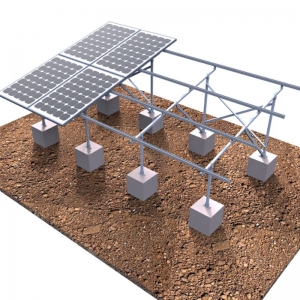
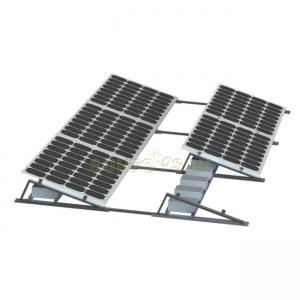
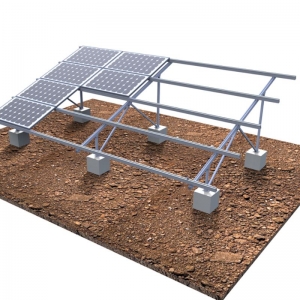
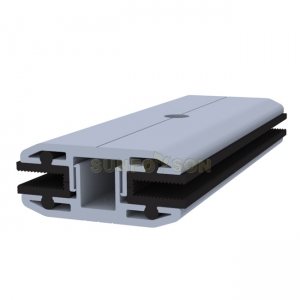
Facing the harsh challenges of Indonesia’s “thousand-island” nation—complex terrain, high temperature, high humidity, and high salt spray corrosion (C4/C5 environment)—major solar mounting structure manufacturers have unveiled targeted solutions. For instance, Hubei Huachuang showcased its “SKYLAND” ground-mounted high-strength steel structure system, made of Q460B low-alloy high-strength steel with heavy hot-dip galvanized anti-corrosion treatment tailored for the tough climate. Antaisolar and SOEASY SOLAR also launched high-durability products (Zn-Al-Mg coated steel and Al-Mg alloy), emphasizing corrosion resistance, typhoon resistance, and modular, easy-to-install features to address construction pain points across Indonesia’s diverse islands.
On the project front, substantial progress has also been made. On April 22, the 124.84 MW PV power plant project on Indonesia’s Bintan Island, undertaken by Boqi Environmental Protection, officially broke ground, marking a key step in the company’s overseas distributed solar expansion. This project directly supports Indonesia’s ambitious solar target of adding 17.1 GW of solar capacity over the next decade. Furthermore, Indonesian media reports indicate that the investment management agency Danantara is advancing a ~$30 billion cross-border renewable energy collaboration with Singapore, focusing on solar facilities and transmission lines, which could become one of ASEAN’s largest energy cooperation projects.
Vietnam: A Policy-Driven Rooftop Solar Revolution
In Vietnam, policy is the strongest driver for solar development. Facing surging electricity demand, the Prime Minister signed Directive No. 10/CT-TTg in 2026, setting six specific goals for electricity savings and rooftop solar development.
The core target aims for at least 10% of public offices and households nationwide to adopt self-consumption rooftop solar by 2030. Experts note that investment costs have dropped to just 40-50% of their level five years ago, making the policy economically viable. On the implementation front, provincial governments are actively drafting plans to prioritize rooftop solar on office buildings and encourage public participation, aiming to mitigate potential power shortages expected between 2026 and 2028 through demand-side management (DSM).
Regional Connectivity: The China-Laos Railway Opens a New PV Logistics Corridor
Beyond Indonesia and Vietnam, other Southeast Asian nations are actively expanding. Notably, supply chain cooperation in the region is reaching a new stage. On March 17, a freight train carrying 300 tons of smart solar mounting structures departed from Panzhihua, China, along the China-Laos Railway to Vientiane, Laos. Total logistics time was cut in half, reducing costs and opening an efficient “golden channel” for Chinese-made PV products entering the Southeast Asian market.
Meanwhile, macro-level support is ramping up. A UN-backed initiative for energy transition has secured over $4 million in initial funding to help Southeast Asian nations, including the Philippines, transition to clean energy without slowing economic growth, focusing on long-term energy planning and regional power grid interconnection.