Ramming Pile vs. Ground Screw: Choosing the Right Foundation for Ground Solar Mounting Systems
Quick Answer / Expert Verdict: The optimal foundation for a ground-mounted PV array depends entirely on a geotechnical soil report. Ramming Piles (driven steel posts) are the fastest and most cost-effective for cohesive, rock-free soils like clay. Ground Screws offer superior uplift resistance in loose, sandy, or heavily rocky terrains. Concrete Ballasts are reserved for brownfields or landfills where ground penetration is strictly prohibited. Matching the foundation to your soil profile is critical to ensuring the 25-year lifespan of your PV racking structure.
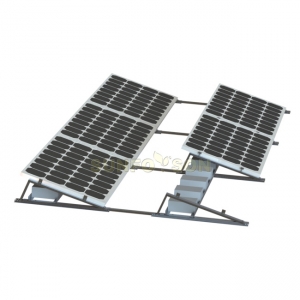
When developers run out of available rooftop space, they turn to open land. While a ballasted flat roof solar bracket relies on the building's existing architecture for support, a ground-mounted solar farm must anchor itself directly into the earth. This introduces a complex variable that rooftop installers never face: unpredictable geology.
As a global structural engineering manufacturer, Xiamen Sunforson Power Co., Ltd understands that a solar array is only as resilient as its foundation. If the foundation fails under heavy wind uplift or soil erosion, the entire megawatt system collapses. In this deep-dive engineering guide, we evaluate the three primary foundation methods to help EPCs specify the correct base for their next utility-scale project.
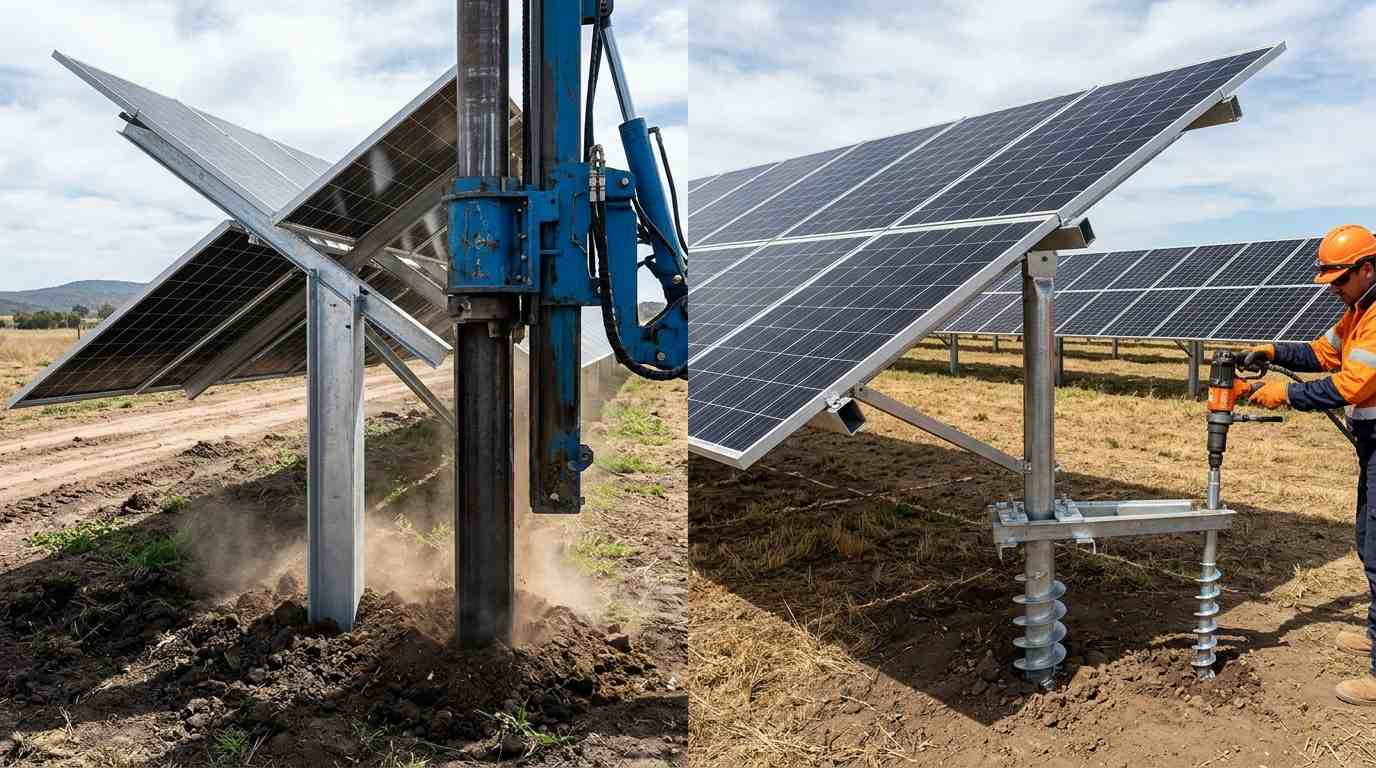
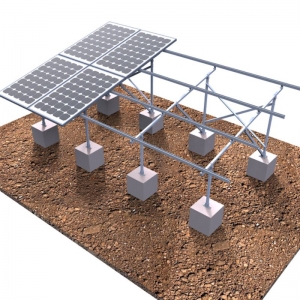
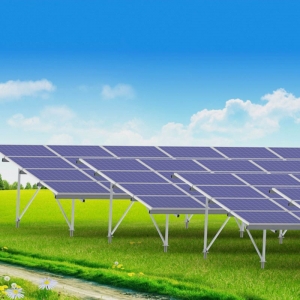
SunRack ground mounting system utilizing hot-dip galvanized steel ramming piles
1. Ramming Pile Foundations (Driven Steel Posts)
Ramming piles (typically C-channel, U-channel, or H-beam steel profiles) are violently driven into the ground using specialized hydraulic hammering machines. Because they require no concrete pouring and no earth excavation, they are the undisputed industry standard for massive solar deployments.
- Ideal Soil Conditions: Cohesive soils such as dense clay, loam, and agricultural land with minimal subsurface rocks. The soil must have a high enough "friction capacity" to grip the sides of the driven steel post to prevent wind uplift.
- Speed of Installation: Extremely high. A skilled crew operating a hydraulic pile driver can install hundreds of posts per day, making it the most cost-effective solution for a utility-scale ground solar mounting system.
- Anti-Corrosion Requirements: Because the steel sits directly in moist, potentially acidic soil, it must be treated with a heavy layer of hot-dip galvanization (minimum 65μm to 85μm) to prevent structural rust over its 25-year design life.
2. Ground Screw Foundations (Helical Piles)
A ground screw operates exactly as its name implies: it is a massive, galvanized steel screw driven into the earth via rotary hydraulic machinery. The large helical threads physically lock into the soil layers, providing exceptional mechanical grip.
- Ideal Soil Conditions: Loose, sandy soils where a smooth ramming pile would easily pull out, or rocky terrains where a hammered pile would bend and fail. The rotary action of the screw can navigate through smaller boulders and lock securely into fractured rock.
- Uplift and Frost Resistance: Ground screws offer vastly superior resistance to both wind uplift and frost heave. The helical flanges anchor the post deep below the frost line, preventing freezing soil from pushing the foundation out of the ground during harsh winters.
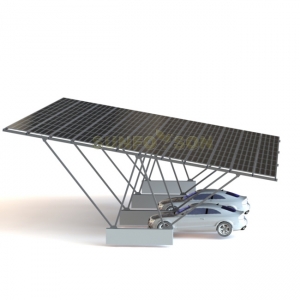
- Versatility: Ground screws are incredibly adaptable. They are not only used for open fields but are also the preferred foundation for an elevated waterproof commercial solar carport structure when traditional concrete pouring is too disruptive to an active parking lot.
3. Concrete Foundations (Poured Footings or Cast-in-Place)
In certain scenarios, piercing the earth is either physically impossible or legally prohibited. Concrete foundations use sheer mass to hold the solar array in place.
- Ideal Site Conditions: Brownfields, capped landfills, contaminated industrial sites (where the EPA prohibits penetrating the soil membrane), or solid bedrock where pile driving is impossible.
- Drawbacks: Pouring concrete requires immense site preparation, curing time, heavy water usage, and massive logistics. This dramatically increases both the carbon footprint of the project and the total EPC labor costs. It is generally avoided unless geologically or legally mandated.
Engineering Matrix: Foundation vs. Geology
| Foundation Type | Best Soil Condition | Installation Speed | Uplift Resistance Capacity |
|---|---|---|---|
| Ramming Pile (C/U Channel) | Cohesive Clay, Loam, Agricultural Dirt | Very Fast (Lowest Labor Cost) | Moderate to High (Depends on depth) |
| Ground Screw | Sand, Gravel, Rocky, Loose Soil | Fast (Requires rotary equipment) | Extremely High |
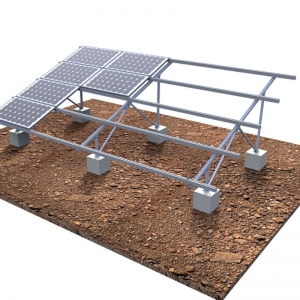
| Concrete Ballast | Capped Landfills, Solid Bedrock | Slow (Requires curing time) | High (Based strictly on mass weight) |
Frequently Asked Questions (FAQ) for Site Developers
Q1: How do I know which foundation my project actually needs?
Never guess. EPCs must commission a localized Geotechnical Report (soil test). Sunforson’s engineering team will review the N-values (soil density), water table levels, and soil corrosivity from this report to scientifically recommend the safest and most economical foundation system for your specific site.
Q2: What is a "pull-out test"?
Before executing a full megawatt installation, a pull-out test involves driving a few sample piles or screws into the project site and using hydraulic machinery to physically try and pull them out. This confirms the exact physical resistance of your soil, allowing our engineers to optimize the pile length and save you material costs.
Q3: Can Sunforson supply both ramming piles and ground screws?
Yes. SunRack solar mounting systems are highly versatile. We manufacture and supply heavy-duty hot-dip galvanized C/U steel posts, various lengths of flanged ground screws, and the corresponding highly pre-assembled aluminum or steel upper racking structures.
Base Your Solar Investment on Solid Engineering
An incorrect foundation choice can lead to devastating structural failure. Trust Sunforson to provide data-driven engineering calculations and robust mounting hardware tailored perfectly to your geological environment.
Send us your geotechnical report and project layout for a free engineering analysis: info@sunforson.com.