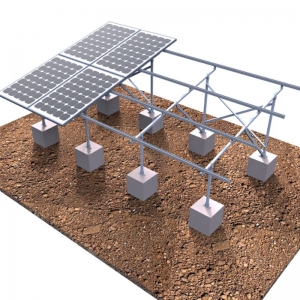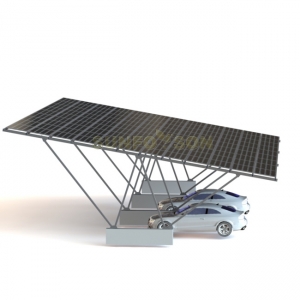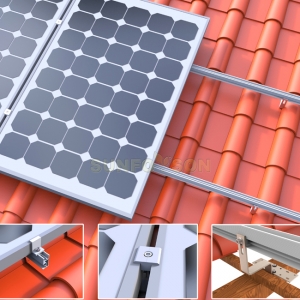
When choosing materials for solar mounting structures, more people are asking: HDG or ZAM – which one actually makes more sense?
On price: ZAM is cheaper.
In August 2026, Tianjin market prices for solar racking showed HDG at roughly 820 USD/ton, while ZAM came in at about 650 USD/ton – a gap of around 170 USD per ton, making ZAM nearly 20% more cost-effective.
Why the difference? HDG requires secondary processing: profiles have to be fabricated first, then sent off for hot-dip galvanizing. ZAM coated steel comes with a pre-coated sheet – ready to fabricate and ready to ship – saving one step and a significant amount of cost.
What about performance? Does cheaper mean lower quality?
Not at all. ZAM coating outperforms HDG in corrosion resistance. Standard HDG lasts a few hundred hours in salt spray tests – ZAM can hold up to 3000-9000 hours.
More importantly, ZAM has a key feature: self-healing at cut edges. When the structure is cut or drilled, the exposed steel surface is protected by a self-forming film that prevents corrosion from spreading – something HDG cannot do.
If your project is in coastal areas, or high-humidity, high-corrosion environments, ZAM has a clear edge. In inland, dry conditions, HDG works fine – but with ZAM priced lower and requiring far less maintenance, the long-term cost advantage is hard to ignore.
So which one should you choose?
- Coastal or high-corrosion areas: ZAM is the safer, longer-lasting option.
- Inland or standard environments: both work – decision comes down to budget.
- If you want long-term, low-maintenance performance: ZAM's 25+ year service life gives it the edge.
- If upfront cost is your main concern: HDG is more expensive per ton than ZAM – so the math already leans toward ZAM.
Choosing the right solar mounting solution isn't about which material is "better" in general – it's about which one fits your project best. Start by confirming site conditions and design life. Then compare the real numbers. That's how you pick the right solution.