Quick Answer / Expert Engineering Verdict: Deploying a solar array in regions with heavy winter snowfall (such as Canada, Northern Europe, or Japan) requires specialized structural engineering to prevent catastrophic frame collapse. EPCs must account for extreme static dead weight (measured in kPa) and dynamic "Snow Creep" (downhill sliding forces). A snow-optimized PV racking system utilizes thickened Q355B steel or AL6005-T5 profiles, mid-purlin panel support to prevent glass deflection, and helical ground screws driven below the frost line to actively prevent Frost Heave from pushing the foundations out of the frozen earth.
While hurricanes and typhoons capture the most attention in solar structural engineering, extreme winter weather poses a far more insidious threat to photovoltaic arrays. Wind is a temporary, dynamic force; snow, however, is a relentless, accumulating dead weight that can sit on a solar array for months, slowly warping aluminum rails and crushing solar glass.
For EPCs (Engineering, Procurement, and Construction companies) operating in high-latitude climates, purchasing standard, low-cost solar brackets is a guaranteed path to system failure. The structural hardware must be meticulously calculated to endure localized snow accumulation, ice build-up, and the geological nightmare of freezing soil.
As a global leader in topographical and climatic PV structural engineering, Xiamen Sunforson Power Co., Ltd designs brackets specifically engineered to survive the harshest winters on the planet. In this comprehensive technical guide, we dissect the physics of snow loading, the mechanics of frost heave, and how to specify the correct racking architecture for extreme cold-weather deployments.
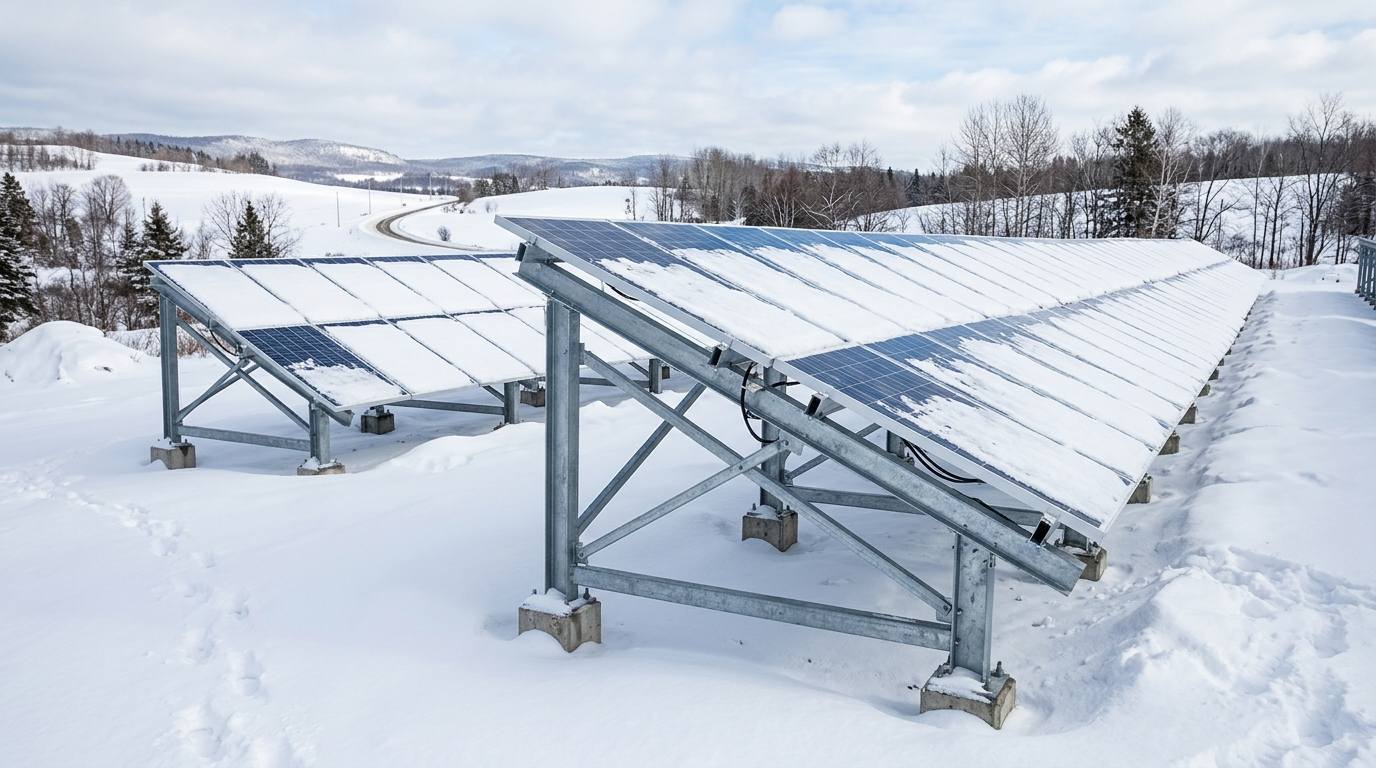
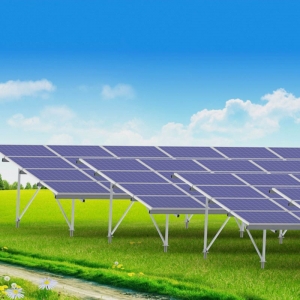
Figure 1: SunRack heavy-duty structures enduring extreme snow accumulation without structural deflection
1. The Physics of Snow: Static Weight vs. Snow Creep
To engineer a surviving bracket, you must understand how snow behaves mechanically. It is not just fluffy white powder; as snow accumulates and goes through freeze-thaw cycles, it compresses into dense ice.
- Static Dead Load (Downward Pressure): Standard racking is typically tested for snow loads of 1.4 kPa to 1.6 kPa. However, in alpine regions, snow loads can easily exceed 3.0 kPa to 5.4 kPa (approx. 110+ psf). If the span between support purlins is too wide, this immense downward pressure will cause the aluminum frame of the solar panel to bow inward, resulting in micro-cracks in the silicon cells or complete glass shattering.
- Snow Creep (Downhill Shearing Force): When snow accumulates on a tilted array, gravity slowly pulls the glacier-like mass downward. This phenomenon, known as Snow Creep, exerts massive sheer stress on the mid-clamps, end-clamps, and the roof attachments. If an EPC utilizes standard L-feet on a steep roof, the creeping snow can literally shear the aluminum bolts in half, sending a catastrophic avalanche of panels off the roof.
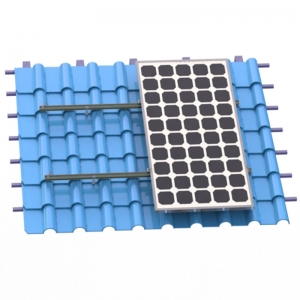
The Engineering Solution: For deploying pitched metal roof PV racking brackets in alpine zones, Sunforson engineers mandate the use of heavy-duty, reinforced L-feet with thicker cross-sections. Additionally, we integrate "Anti-Slip" stopper pins and dense rail layouts that minimize the cantilever distance, physically blocking the panels from sliding down the rails under sheer pressure.
2. Conquering the Ground: The "Frost Heave" Threat
For utility-scale ground mounts, the greatest winter threat comes from below the earth. When soil freezes, the water trapped inside it expands. This expansion pushes the soil forcefully upward—a geological process known as Frost Heave.
If a solar developer uses standard, smooth C-channel ramming piles driven only 1.5 meters deep, the freezing topsoil will grip the sides of the steel post. As the soil expands upward, it acts like a hydraulic jack, ripping the steel pile completely out of the ground. By spring, the entire megawatt array will be buckled, misaligned, and structurally ruined.
The Engineering Solution: Helical Ground Screws
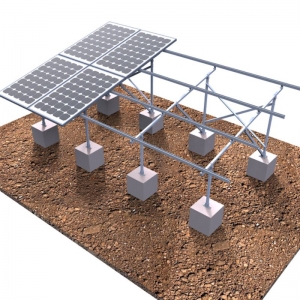
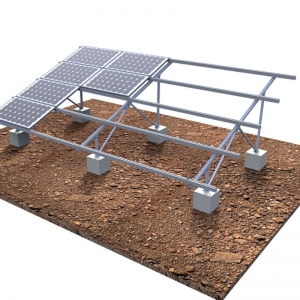
To neutralize frost heave, EPCs must deploy heavy-duty ground solar mounting frames for high snow zones utilizing specialized Helical Ground Screws. Sunforson’s engineering protocol requires these screws to be driven strictly below the local frost line (often 2.0 to 2.5 meters deep).
Because the large helical flanges (threads) of the screw are anchored securely in the unfrozen, stable earth deep below, they act as an immovable anchor. When the upper layers of soil freeze and expand, they simply slide harmlessly past the smooth upper shaft of the ground screw, leaving the solar racking perfectly level and secure.
3. Clearances and Carports: Managing Snow Accumulation
When designing structures for high snow regions, Ground Clearance is paramount. If a standard ground mount has a lower edge clearance of only 0.5 meters, the first major snowstorm will bury the bottom row of solar panels. Not only does this stop electricity generation, but the snowbank pressing against the glass creates a "dam," trapping further snow on the array and multiplying the structural weight. Sunforson strongly advises a minimum lower ground clearance of 1.0m to 1.5m in heavy snow regions to allow shed snow to accumulate harmlessly beneath the array.
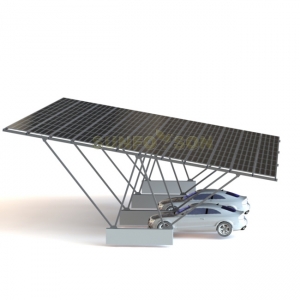
This logic is even more critical in commercial parking lots. When engineering commercial waterproof solar carport structures for winter cities, the canopy must support massive snow loads without sagging, while simultaneously preventing dangerous snow avalanches from falling onto pedestrians and vehicles below. Sunforson addresses this by optimizing the structural tilt angle (usually steeper than 15 degrees to encourage natural snow shedding) and utilizing ultra-thick Q355B galvanized steel main pillars that will not buckle under asymmetrical snow loading (when snow builds up on one side of the canopy and not the other).
Technical Matrix: Standard Racking vs. Extreme Winter Racking
| Engineering Parameter | Standard Commercial Racking | SunRack Extreme Winter Racking |
|---|---|---|
| Structural Load Capacity | Designed for ≤ 1.4 kPa Snow Load | FEA Verified for up to 5.4 kPa (Heavy Ice/Snow) |
| Panel Support Mechanism | Two horizontal rails (Top & Bottom clamping) | Three or Four horizontal rails to prevent glass bowing |
| Ground Foundation Type | Smooth C-Channel Ramming Piles | Flanged Ground Screws (Anchored below Frost Line) |
| Panel Deflection Control | Standard end-clamps | Anti-slip pins and reinforced mechanical stoppers |
Frequently Asked Questions (FAQ) for Winter Solar Deployment
Q1: What is the optimal tilt angle for shedding snow?
While solar production peaks at an angle matching your latitude, shedding snow requires gravity. For heavy snow zones, Sunforson engineers highly recommend designing fixed-tilt structures at 30 degrees to 45 degrees. Angles shallower than 20 degrees will not shed snow naturally, requiring manual, labor-intensive cleaning to resume power generation.
Q2: Do bifacial solar panels help with snow shedding?
Yes, significantly. Bifacial panels generate electricity from the rear side by catching light reflected off the surrounding white snow (albedo). As the rear cells generate power, they emit a small amount of thermal heat. This heat warms the glass just enough to melt the thin layer of ice connecting the snowpack to the front glass, triggering a rapid, natural avalanche that clears the panel much faster than a standard monofacial setup.
Q3: How deep is the "Frost Line"?
The frost line varies strictly by geographical location and climate. In milder areas, it may only be 0.5 meters deep; in northern Canada or Scandinavia, the soil may freeze down to 2.5 meters. EPCs must consult local geological surveys and provide this data to Sunforson so we can customize the exact length of the ground screws required to anchor safely beneath it.
Winterize Your Solar Investment with Precision Engineering
Do not let extreme winter weather crush your megawatt array or void your warranties. Partner with the structural experts at Xiamen Sunforson Power Co., Ltd. We calculate every ounce of snow creep and mitigate every millimeter of frost heave to deliver a racking system guaranteed to outlast the storm.
Send us your local snow load data and soil reports for a free, cold-weather structural analysis:
info@sunforson.com