Quick Answer / Expert Engineering Verdict: Deploying standard photovoltaic brackets in coastal marine (salt mist) or heavy industrial (chemical) environments will result in rapid structural degradation, compromising the 25-year design life of the solar array. To survive ISO 9223 C4 and C5 corrosivity categories, EPCs must specify AL6005-T5 aluminum with elevated anodization (AA20/AA25), hot-dip galvanized steel with a minimum zinc coating of 85μm, and strictly isolate dissimilar metals using EPDM rubber gaskets to prevent galvanic (bimetallic) corrosion.
As the global push for renewable energy intensifies, megawatt-scale solar projects are no longer limited to mild inland deserts and benign agricultural fields. Today, Engineering, Procurement, and Construction (EPC) companies are actively deploying massive photovoltaic (PV) arrays on offshore islands, beachfront commercial resorts, floating reservoirs, and heavy chemical industrial roofs.
These extreme environments introduce a silent, relentless threat to the structural integrity of the solar array: Atmospheric Corrosion. Salt spray from the ocean, sulfur dioxide from industrial smokestacks, and high ambient humidity can eat through standard racking materials in a matter of months. If the underlying support structure rusts and fails, the entire multi-million-dollar investment in premium solar panels is completely lost.
As a premier global manufacturer of advanced PV structures, Xiamen Sunforson Power Co., Ltd specializes in metallurgical engineering and anti-corrosion surface treatments. In this comprehensive technical whitepaper, we will decode the international standards for environmental corrosivity, explain the electrochemistry of racking failure, and provide a definitive guide on how to specify materials for extreme deployment zones.
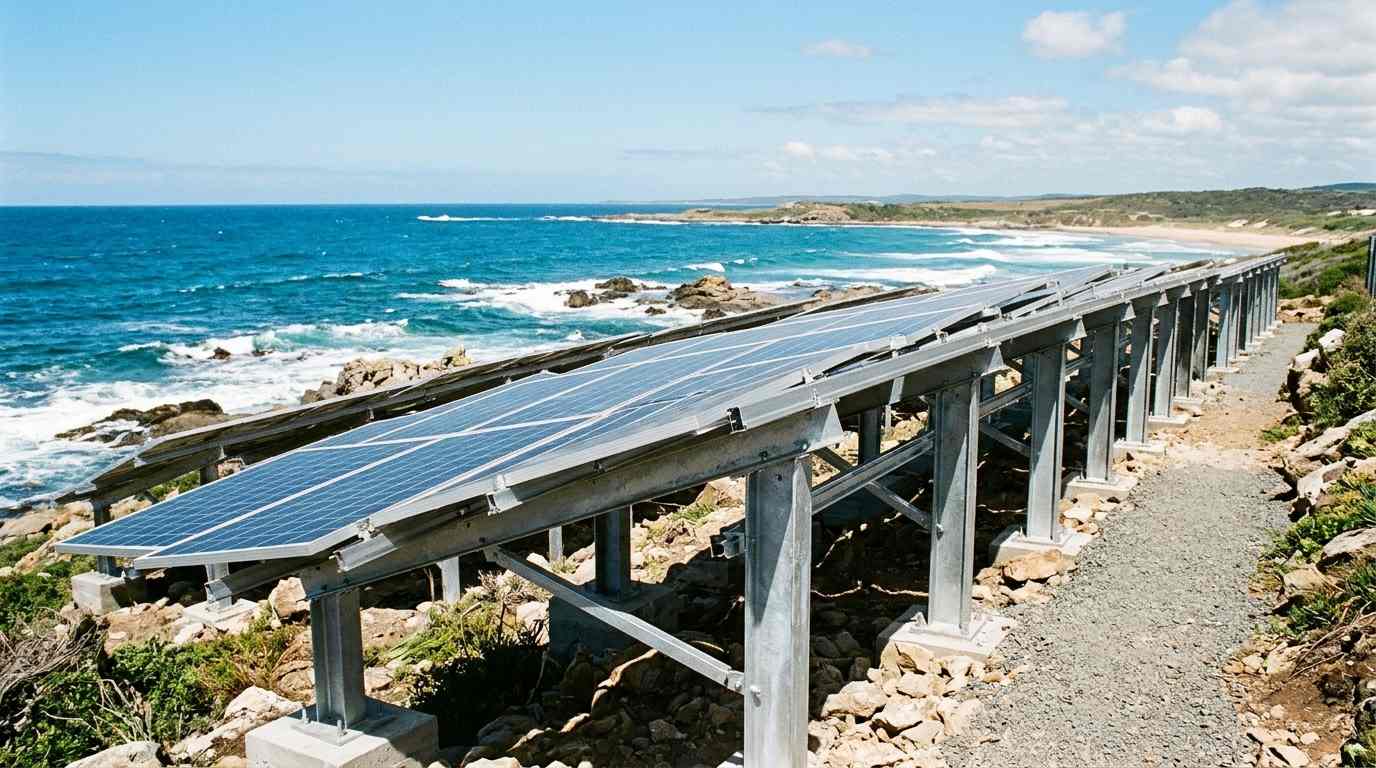
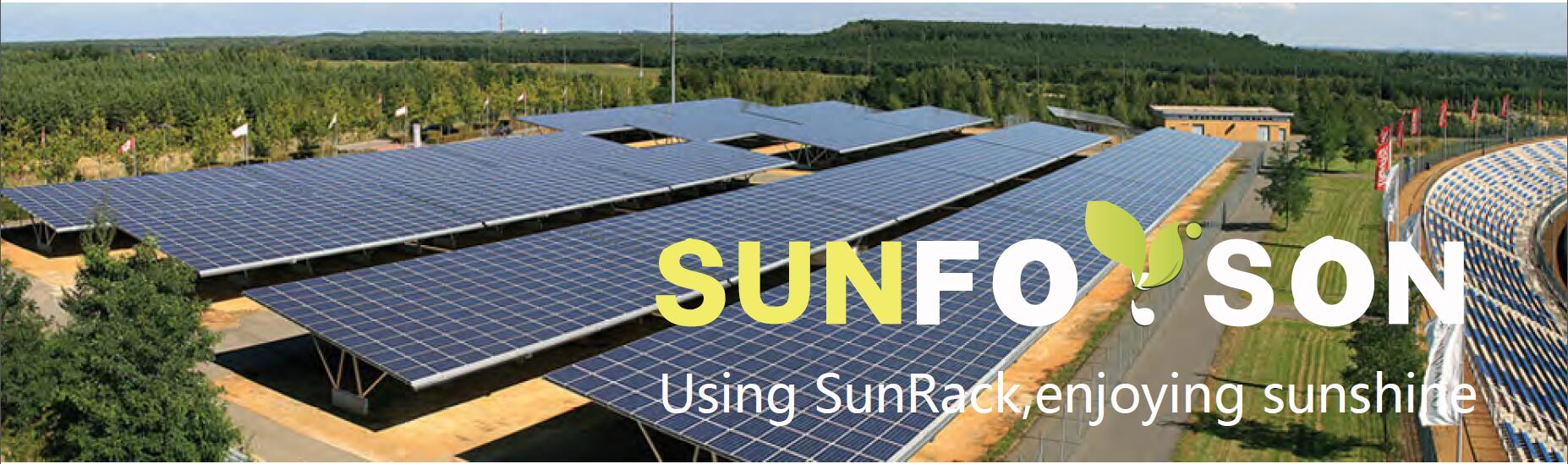
SunRack heavily anodized aluminum structures deployed in a C5 Marine coastal environment
1. Classifying Your Site: Understanding ISO 9223 Corrosivity Categories
Before an engineer can recommend a bracket material, they must scientifically classify the environment. The globally accepted standard for measuring atmospheric corrosivity is ISO 9223. This standard categorizes environments from C1 (very low) to CX (extreme), based on the presence of moisture, airborne salinity (chlorides), and industrial pollution (sulfur dioxide).
If a solar developer purchases generic racking designed for a C2 environment and installs it on a C5 coastline, the system will face catastrophic failure, and the manufacturer's warranty will be immediately voided. Below is the engineering matrix used to evaluate site conditions:
| ISO 9223 Category | Environment Description | Typical Solar Deployment Scenario | Steel Thickness Loss (1st Year) |
|---|---|---|---|
| C1 & C2 (Low) | Dry rural areas, clean air, low humidity. | Standard inland commercial rooftops. | < 10 μm |
| C3 (Medium) | Urban areas with mild sulfur dioxide pollution, or inland coastal zones. | Suburban utility farms, city parking canopies. | 10 to 25 μm |
| C4 (High) | Industrial areas with chemical processing, or coastal areas with moderate salt spray. | Factory rooftops, projects within 5km of the sea. | 25 to 50 μm |
| C5-I / C5-M (Very High) | Heavy industrial chemical plants, or direct marine coastlines (constant salt mist). | Island microgrids, beachfront resorts. | 50 to 80 μm |
| CX (Extreme) | Offshore environments, extreme salt water splashing. | Floating solar (FPV) on ocean water. | > 80 μm |
2. The Silent Killer: Preventing Galvanic (Bimetallic) Corrosion
When engineering solar arrays for wet, highly conductive environments (like coastal salt mist zones), EPCs must address electrochemistry. Galvanic corrosion occurs when two dissimilar metals—such as an aluminum solar panel frame and a carbon steel mounting rail—come into direct physical contact in the presence of an electrolyte (saltwater or humid condensation).
Because aluminum is more "anodic" (active) than steel, the steel will essentially strip electrons from the aluminum, causing the aluminum frame to rapidly pit, degrade, and turn to white powder. This process can destroy the clamps holding the panels in a matter of months.
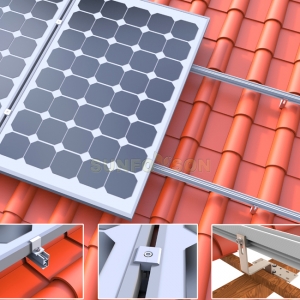
To prevent this in our anti-corrosion solar roof racking structures, Sunforson implements strict dielectric isolation protocols. We utilize high-grade EPDM (Ethylene Propylene Diene Monomer) rubber gaskets and specialized SUS304/SUS316 stainless steel fasteners. The EPDM rubber acts as a physical electrical insulator, preventing the dissimilar metals from sharing electrons, thus entirely halting the galvanic corrosion circuit.
3. Upgrading Aluminum Alloys for Marine and C&I Rooftops
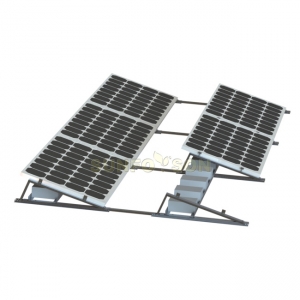
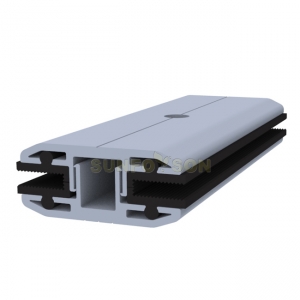
Aluminum (specifically AL6005-T5) is the preferred material for distributed generation and commercial roofs due to its lightweight nature and natural oxide layer. However, in a C4 or C5 environment, raw aluminum will still suffer from severe pitting corrosion caused by airborne chlorides.
The engineering solution is Deep Anodic Oxidation (Anodizing). This electrochemical process artificially thickens the protective oxide layer on the surface of the metal, creating a microscopic honeycomb structure that is then hermetically sealed.
- Standard Inland Racking (C2/C3): Typically requires an anodized thickness of AA10 to AA12 (10-12 microns).
- Coastal & Heavy Industrial (C4): Requires a minimum thickness of AA15 (15 microns) to resist chemical and salt degradation.
- Direct Marine / Tropical Coastlines (C5): Sunforson engineers mandate an AA20 to AA25 (20-25 microns) treatment. This specialized deep anodization ensures that the aluminum rails remain structurally pristine even when bombarded by daily ocean spray.
4. Fortifying Steel for Utility-Scale Ground Foundations
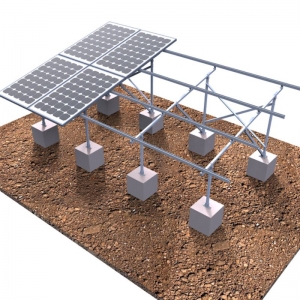
For megawatt-scale solar farms built on open terrain, steel remains the structural backbone due to its unmatched tensile strength. However, raw Q235B or Q355B carbon steel will rust instantly when exposed to soil moisture and atmospheric oxygen.
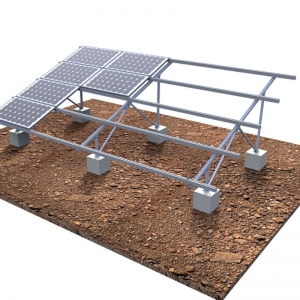
To protect our heavy-duty coastal ground solar mounting frames, the steel must undergo Hot-Dip Galvanization (HDG) according to ISO 1461 standards. This is not a simple paint job; the fabricated steel is submerged into a vat of molten zinc (at roughly 450°C), creating a permanent metallurgical bond between the steel and the zinc alloy layers.
The zinc acts as a "sacrificial anode." When scratched or exposed to corrosive salts, the zinc will preferentially corrode, saving the underlying steel core. For standard soils, a 65μm zinc thickness is sufficient. However, in highly acidic soils, coastal plains, or marshlands (C4/C5 environments), Sunforson specifies a massive 85μm to 100μm hot-dip galvanized coating.
Alternative Advanced Materials: For extreme corrosive soils where even heavy zinc fails, developers are increasingly turning to ZAM (Zinc-Aluminum-Magnesium) coated steel (such as MAC steel). The addition of magnesium triggers a self-healing chemical reaction that offers up to 5 times the corrosion resistance of traditional HDG steel, making it ideal for the harshest environments on earth.
5. The De-Icing Salt Threat: Protecting Solar Carports in Winter Cities
It is a common misconception that salt corrosion only happens near the ocean. For projects located in northern winter climates (like Canada, Northern Europe, or the American Midwest), the primary corrosive threat comes from the ground up: De-icing road salts (Sodium Chloride and Calcium Chloride).
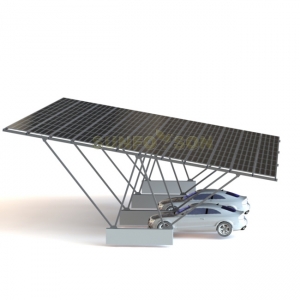
When designing waterproof commercial solar parking canopies, the steel columns supporting the structure are constantly bombarded by salty slush splashed up by vehicle tires. If unmitigated, this slush accumulates at the base plate of the carport pillar, causing severe structural degradation exactly where the stress loads are highest.
To combat this, Sunforson engineers deploy dual-layer protection on carport columns in snow zones. We apply the standard heavy hot-dip galvanization, by a thick industrial Epoxy or Polyurethane powder-coated finish on the lower 2 meters of the pillar. Furthermore, the concrete pedestals are designed to elevate the steel base plates at least 300mm above the asphalt, keeping the structural steel entirely out of the splash zone.
Frequently Asked Questions (FAQ) for Extreme Environment Deployment
Q1: What is a "Salt Mist Corrosion Test" and why do I need to ask for it?
A Salt Mist (or Salt Spray) test is an accelerated laboratory simulation governed by standards like IEC 61701 or ASTM B117. Mounting components are placed in a chamber and sprayed with highly concentrated saline fog for hundreds of hours. A professional manufacturer like Sunforson will provide these independent lab reports to guarantee their racking materials will not rust prematurely in real-world coastal applications.
Q2: Can I use standard stainless steel bolts near the ocean?
No. Standard SUS304 (A2) stainless steel is highly resistant to general moisture but will eventually suffer from "tea-staining" and pitting in environments with high airborne chlorides (salt). For C4 and C5 marine environments, you must specify SUS316 (A4) stainless steel, which contains Molybdenum for superior resistance to chloride-induced pitting.
Q3: Does specifying extreme anti-corrosion materials ruin project ROI?
Upgrading from standard AA10 anodizing to AA20, or upgrading steel galvanization from 65μm to 85μm, typically adds only a marginal percentage to the total hardware CapEx. However, replacing a collapsed racking system and damaged solar panels in year 7 of a 25-year PPA contract will bankrupt a project. Investing in the correct environmental engineering upfront is the most financially prudent decision an EPC can make.
Protect Your Solar Assets with Expert Metallurgical Engineering
Do not let environmental corrosion erode your energy investments. Partner with the structural experts at Xiamen Sunforson Power Co., Ltd. We evaluate your specific site corrosivity, wind loads, and geological data to manufacture a solar mounting system guaranteed to endure the harshest conditions on the planet.
Contact our engineering team today for a free environmental assessment and custom racking quotation:
info@sunforson.com